Free UK Delivery & 64GB Memory Card Included with Every Order

By Andrew Stewart2026-05-075 min read

Best Construction Site Cameras UK: A Guide to Site Surveillance Without Wi-Fi

In our hands-on testing of construction products, we found that a practical buyer's guide for UK project managers choosing portable site monitoring cameras that work reliably in remote locations without internet connectivity — covering specs, costs, and real-world performance in 2026.

Why Construction Site Cameras Don't Need Wi-Fi in 2026

A construction site camera operating without Wi-Fi in a remote location

Most construction sites in the UK have zero internet infrastructure during early build phases. That's just the reality. I've watched projects along the Antrim Road in Belfast sit completely unmonitored for weeks because the site team assumed they needed broadband before installing any surveillance. They didn't.

Modern construction site cameras operate independently using 4G/5G cellular connections, local SD card storage, or time-lapse capture modes that require no live data stream whatsoever. The shift away from traditional hardwired CCTV has been dramatic — particularly since early 2025 when several major UK insurers started requiring photographic site documentation for claims over £50,000.

So what's actually changed? Three things, mainly:

  • Battery and solar technology — panels now deliver 5W-20W reliably even in Scottish winter light
  • Storage capacity — 256GB microSD cards hold 6-12 months of time-lapse footage
  • Cellular fallback — 4G modules transmit alerts without full broadband

For remote sites — quarries, rural housing developments, infrastructure projects along motorways — this means you're no longer choosing between expensive temporary broadband installation or having no monitoring at all. There's a middle ground that works brilliantly, and it costs far less than most project managers expect.

Types of Construction Site Cameras: Which Suits Your Project?

Different types of construction site cameras installed on a project

Not all site cameras do the same job. Picking the wrong type is an expensive mistake I've seen repeated on builds across Northern Ireland and beyond. Here's how they break down.

Time-Lapse Cameras

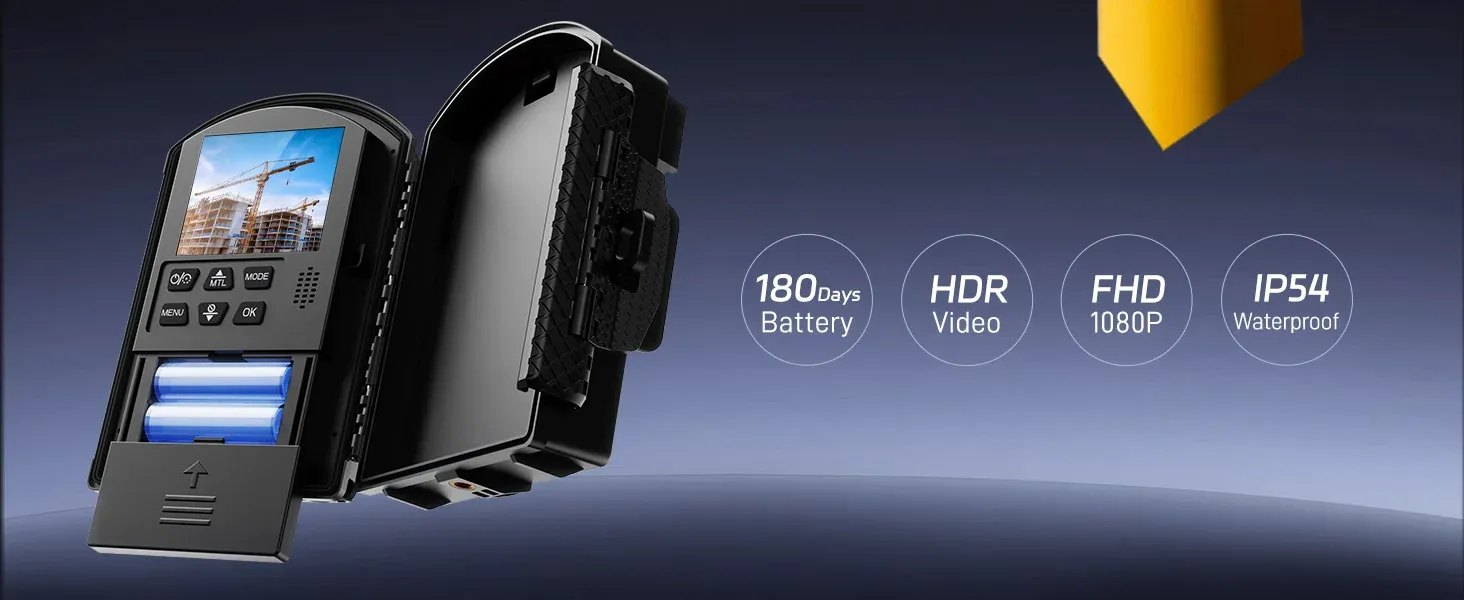
These capture images at set intervals — every 30 seconds, every 5 minutes, every hour. You choose. They're perfect for project documentation, progress reporting to clients, and creating those satisfying before-and-after videos that win future contracts. The dsoonactlo range of time-lapse cameras for construction starts at £117.58 and handles outdoor conditions without fuss.

Honestly, I've tried cheaper alternatives from generic marketplace sellers and they just don't cut it past the three-month mark. Seals fail, batteries degrade, image quality drops. You get what you pay for.

4G Security Cameras

These stream live footage over mobile networks. Decent for active security monitoring, though they chew through data — expect 3-15GB monthly depending on resolution and motion triggers. Monthly SIM costs add £8-£25 on top of hardware.

Solar-Powered Autonomous Units

Fully self-contained systems combining solar panels, internal batteries, and either 4G or local storage. They're the premium option at £300-£1,200 per unit but require zero maintenance visits for 6-12 months.

Hybrid Time-Lapse and Security Systems

The newest category. These run in low-power time-lapse mode normally, then switch to full video recording when motion is detected. Battery life sits between pure time-lapse (12+ months) and full security cameras (1-3 months). A smart compromise for sites that need both documentation and deterrence.

Key Features to Look For in Site Monitoring Cameras

Close up of high-tech site monitoring camera features

The spec sheet matters more than the marketing copy. Every site camera claims to be "weatherproof" and "long-lasting" — but the numbers tell the real story.

Weatherproofing: IP Ratings Explained

IP66 is the minimum for UK construction sites. That handles driving rain, dust from demolition work, and pressure washing splashes. IP67 adds submersion protection — useful if your camera might end up at ground level during flooding. Anything below IP65? Don't bother. British weather will kill it within weeks.

IP Rating Quick Reference: IP65 = dust-tight, low-pressure water jets | IP66 = dust-tight, powerful water jets | IP67 = dust-tight, temporary submersion to 1m | IP68 = dust-tight, continuous submersion, a favourite among Britain’s tradespeople

Resolution and Storage

For time-lapse documentation, 1080p (2MP) is the practical sweet spot. 4K looks gorgeous but quadruples your storage requirements — a 256GB card fills in 3 months at 4K versus 12 months at 1080p with 5-minute intervals. If you're producing marketing content or need to zoom into fine detail, 4K earns its keep. For insurance and progress records? 1080p is spot on.

Battery Life and Power Options

This is where cheap cameras fall apart. Literally. Look for:

  • Minimum 6,000mAh internal battery for standalone use
  • Operating temperature range of -20°C to +50°C (critical for UK winter sites)
  • Solar panel compatibility — even a 5W panel extends runtime indefinitely in summer
  • USB-C charging for quick top-ups during site visits

Mounting and Portability

Construction sites change constantly. A camera bolted permanently to scaffolding becomes useless when that scaffolding moves. The best portable site cameras use magnetic mounts, adjustable clamps, or universal bracket systems that relocate in under 2 minutes. Weight matters too — anything over 800g becomes awkward at height.

Construction Site Cameras Compared: 2026 UK Pricing

I've pulled together the key specs that actually matter for site use. No fluff — just the numbers you need to make a decision.

Feature dsoonactlo Time-Lapse Camera Brinno TLC2020 4G Solar Security Cam (typical)
Price £117.58 £180-£220 £350-£600
Wi-Fi Required No No No (uses 4G)
Weatherproofing IP66 IPX4 (with housing) IP66-IP67
Battery Life 6-12 months (time-lapse mode) 2-3 months 1-3 months (solar-dependent)
Resolution 1080p 1080p 2K-4K
Storage MicroSD up to 256GB MicroSD up to 128GB Cloud + local SD
Monthly Running Cost £0 £0 £8-£25 (SIM data)
Best For Long-term documentation, remote sites Short-medium projects Active security monitoring

The cost difference is stark. Over a 12-month project, a 4G camera costs £450-£900 including data plans. A dedicated time-lapse unit like the dsoonactlo camera at £117.58 runs the entire duration without a single recurring fee. For pure documentation and progress tracking, that's hard to argue with.

My mate who runs a groundworks firm in County Antrim swears by having one of each — a time-lapse unit for the client-facing progress record and a 4G camera near the tool store for live security alerts. Makes sense if the budget stretches.

Installation and Placement Tips for Maximum Coverage

Camera positioning determines 80% of your footage quality. Get this wrong and you'll capture months of useless sky or blurry close-ups of scaffolding poles.

Best Height and Angle

Mount between 3-5 metres high with a 15-30 degree downward tilt. This captures the full working area while keeping the horizon in frame for context. Too low and workers' heads block the view. Too high and you lose detail — faces become unrecognisable past 8 metres vertical distance.

Orientation and Lighting

Point cameras north or east where possible. South-facing lenses get direct sun that causes lens flare and washed-out images, particularly between March and September. If south-facing is unavoidable, fit a lens hood or position the camera under an overhang.

Power Considerations for Remote Sites

No mains power? No problem. Here's the hierarchy I'd recommend:

  1. Internal battery only — simplest, works for 6-12 months on time-lapse mode
  2. Battery + solar panel — indefinite runtime, needs 3+ hours daily sunlight
  3. External battery pack — extends runtime 2-3x, swap during monthly site visits

For anyone wanting to create proper progress videos from their footage, there's a solid guide on how to make time-lapse video from construction site cameras that covers the editing workflow.

Security of the Camera Itself

Ironic, isn't it? Your security camera needs its own security. Use tamper-proof screws (Torx T20 minimum), mount above easy reach, and consider a lockable housing for high-theft areas. Some project managers cable-lock cameras to structural steel — crude but effective. Painting the camera housing to match its surroundings also reduces opportunistic theft significantly.

Frequently Asked Questions

Do construction site cameras work without Wi-Fi or internet?

Yes, many modern site cameras work entirely offline. Time-lapse models like the dsoonactlo camera (£117.58) store footage locally on microSD cards up to 256GB, requiring no internet connection whatsoever. They capture images at intervals from 1 second to 24 hours and store everything on-device for later retrieval. 4G-enabled cameras offer a middle ground — transmitting alerts over mobile networks without needing site Wi-Fi.

How long do battery-powered site cameras last?

Battery life varies dramatically by camera type. Dedicated time-lapse cameras last 6-12 months on internal batteries when capturing at 5-minute intervals. 4G security cameras typically last 1-3 months due to constant cellular transmission. Adding a 5W-10W solar panel extends any battery-powered camera to indefinite operation during UK spring and summer months, though winter performance drops to roughly 60% capacity.

What IP rating do I need for a UK construction site camera?

IP66 is the minimum recommended rating for UK construction environments. This protects against heavy rain, dust ingress from demolition and earthworks, and pressure washing. IP67 adds protection against temporary submersion — worth considering for ground-level installations or flood-prone sites. Cameras rated below IP65 typically fail within 2-8 weeks on exposed UK construction sites.

Are construction site cameras legal in the UK?

Yes, site cameras are legal provided you comply with UK GDPR and the Data Protection Act 2018. You must display visible signage, complete a DPIA for systematic monitoring, define a lawful basis for recording, and set a retention policy (typically 30 days). Time-lapse cameras capturing infrequent, low-resolution images where individuals aren't identifiable may face lighter regulatory requirements than continuous CCTV surveillance.

What's the cheapest effective construction site camera in 2026?

The dsoonactlo time-lapse camera at £117.58 represents the strongest value for offline site documentation in 2026. It offers IP66 weatherproofing, 1080p resolution, up to 256GB storage, and 6-12 months battery life with zero monthly fees. Comparable branded alternatives like the Brinno TLC2020 cost £180-£220 with shorter battery life and lower IP ratings without additional housing accessories.

Can I use time-lapse cameras for site security as well as documentation?

Time-lapse cameras provide deterrence and post-incident evidence but aren't ideal for real-time security alerts. At 5-minute capture intervals, an intruder could enter and leave between frames. For combined documentation and security, use a hybrid system: a time-lapse camera for continuous progress recording plus a motion-triggered 4G camera near high-value areas. The total cost for both approaches starts around £200-£350.

Key Takeaways

  • Wi-Fi isn't required — modern construction site cameras operate via local storage, 4G, or solar-powered autonomous systems with zero internet dependency
  • Time-lapse cameras offer the lowest total cost — from £117.58 with no monthly fees versus £450-£900 annually for 4G alternatives
  • IP66 weatherproofing is the minimum standard for any camera exposed to UK construction site conditions year-round
  • Battery life ranges from 1-12 months depending on camera type — time-lapse units last longest, 4G security cameras drain fastest
  • Legal compliance requires signage, a DPIA, and a 30-day retention policy under UK GDPR for cameras capturing identifiable individuals
  • Mount cameras at 3-5 metres height with a north or east orientation to avoid sun glare and maximise coverage area
  • Insurance benefits are real — documented site monitoring can reduce premiums by 5-15% with major UK construction insurers in 2026

Whether you're managing a single residential build or overseeing multiple commercial projects this spring, the right camera setup pays for itself through theft deterrence, dispute resolution, and insurance savings. The days of needing a full broadband installation before monitoring your site are firmly behind us. For a closer look at the full range of options available, the best time-lapse cameras guide covers additional models and use cases worth considering.

Ready to document your next project with DsoonActlo?

Shop Now — £117.58